

This is what the Sovereign Lord says to these bones: I will make breath enter you, and you will come to life. -Ezekiel 37:5
There’s no comparison. Music through MacBook Air speakers doesn’t sound bad. But once the laptop is connected to my Edifier Audiophile Bookshelf Speakers the experience is out of this world. No, this post isn’t an adertisement for an enhanced sound system. The difference between the two speakers is a kind of metaphor for an enhanced experience available to every reader of the biblical book of Ezekiel.
Reading Ezekiel from beginning to end isn’t a bad experience. Of course, most chapters melt into a ubiquitous sense of God’s anger and destruction. A few rather disturbing images of human faithlessness also haunt our memory. The prodigal life of an orphan adopted by a compassionate Father (ch. 16) and the troubling story of two insatiable of sisters (ch. 23). Thankfully in chapter 37 we find the hope of resurrection in the valley of dry bones. When the brave soul completes the journey of 48 chapters they quickly turn to John. 3:16 in the attempt to assuage their vertigo. Reading Ezekiel in this way may be good in a spiritual sense of the word. But there is a stereophonic reading of this book that takes the prophet to another level.
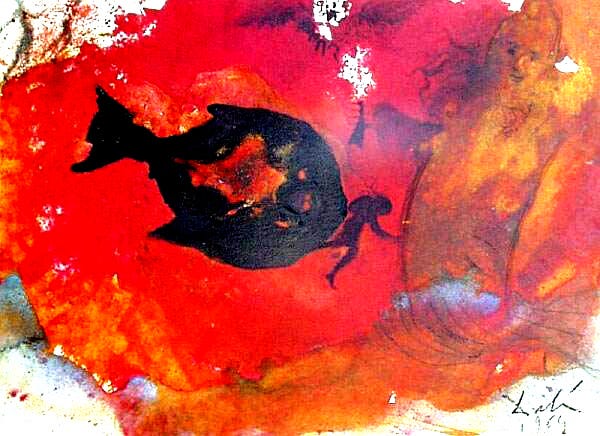
I lose track of time thumbing through my Jerusalem Bible. It isn’t the particular translation that captures my imagination. It’s the more than 30 illustrations of Salvador Dali interspersed among the Scriptures. The Spanish Surrealist painter’s interpretation of Creation, the Tower of Babel, the Beheading of John the Baptist, and the Agony of Christ move those Biblical themes from lo-fi to hi-fi in my imagination. When I compared my experience with Dali to my reading of the prophet’s words it dawned on me that I needed to approach Ezekiel as an art gallery.
I need to read each prophecy of Ezekiel as a self-contained work of art. I can, of course, walk through the gallery in chapter order. We begin with the wild painting of heaven through rended veil (ch. 1). We allow ourselves to be drawn into Ezekiel’s experience of being called to futile ministry in the dystopia created by his people’s disobedience.
Son of man, I am sending you to the Israelites, to a rebellious nation that has rebelled against me; they and their ancestors have been in revolt against me to this very day. The people to whom I am sending you are obstinate and stubborn. Say to them, “This is what the Sovereign Lord says.” And whether they listen or fail to listen – for they are a rebellious people – they will know that a prophet has been among them. -Ezekiel 2:3b-5
I am better prepared for this content by framing Ezekiel as an art gallery. I am no longer concerned with following a story arc or understanding the chronology of the stories or the lack of character development. I turn to view chapters 4 and 5 to find Ezekiel working with mixed media; clay, everyday food like lentils, dung, a sword and hair. Ezekiel’s gallery is less like Pasadena, California’s Norton Simon with Degas, Rembrandt and Monet. It is more like the Museum of Contemporary Art in Los Angeles featuring works by Basquiat, Andy Warhol, and David Hockney.
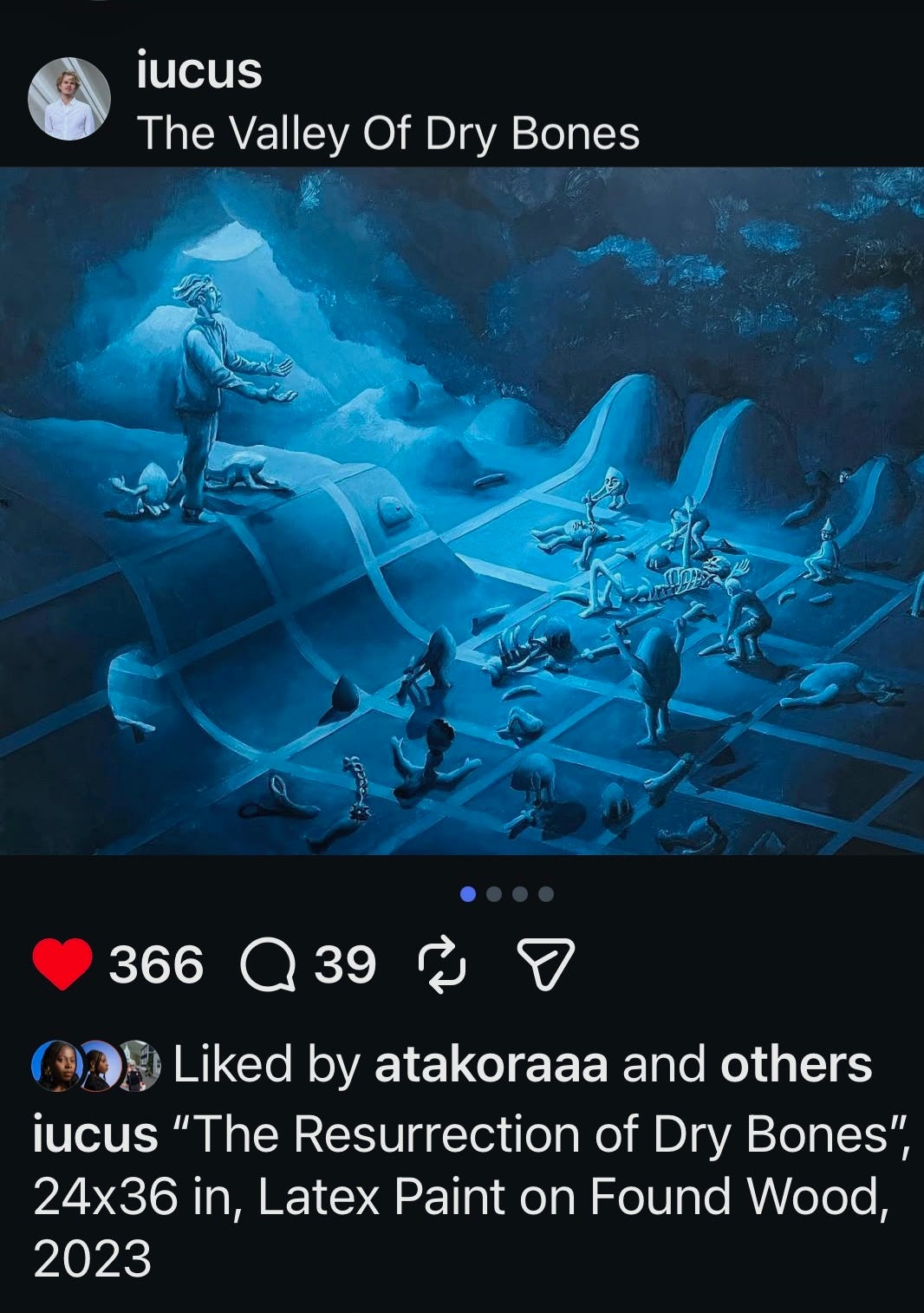
Now I have a decision to make. I could continue to experience Ezekiel this way, artwork by artwork, through the final chapter. This isn’t the way I work through a gallery, however. If I am going to spend time in this gallery like I do other art collections I would skim the book to get a sense of all the artwork. Then I would walk past many works of art to get to the one that catches my attention. I begin to approach Ezekiel in the same way.
I take a few days to listen to the entire book read by actor David Suchet to get an overview of the book. While listening, I note the chapters that catch my attention. The familiar story of the Valley of Dry Bones (ch. 37) catches my eye. I want to dive into that story in more detail. I am less familiar with the Temple and river of life (chs. 40-48) and I want to know it better. The image of Ezekeil eating the scroll inspires me, as it did the author of the New Testament book of Revelation.
And he said to me, ‘Son of man, eat what is before you, eat this scroll; then go and speak to the people of Israel.’ So I opened my mouth, and he gave me the scroll to eat. Then he said to me, ‘Son of man, eat this scroll I am giving you and fill your stomach with it.’ So I ate it, and it tasted as sweet as honey in my mouth. -Ezekiel 3:1-3
I took the little scroll from the angel’s hand and ate it. It tasted as sweet as honey in my mouth, but when I had eaten it, my stomach turned sour. -Revelation 10:10
I determine to follow Mary’s example as I look at each of these three works in turn. Luke describes her reaction to the nativity taking place around her:
So they [the shepherds] hurried off and found Mary and Joseph, and the baby, who was lying in the manger. When they had seen him, they spread the word concerning what had been told them about this child, and all who heard it were amazed at what the shepherds said to them. But Mary treasured up all these things and pondered them in her heart. -Luke 2:16-19
As I treasure my Ezekiel passages, Ezekiel’s prophecy to his people turns into words of Ezekiel addressed personally to me. As I peer into his world and ponder the meaning I find God revealing things about I should consider in my faith and life. Amazingly, the prophecy’s original intent reaches out to me to warn me and encourage me to live differently because of this encounter. Ezekiel in stereo!
Reading Ezekiel from beginning to end isn’t a bad experience. But there is so much more for us than a confusing story of prophetic anger, destruction, and guilt. When we approach Ezekiel as an art gallery we find the incredible treasure of God urginging us forward in our journey with Jesus, using Ezekiel to prune us so that we can makegoodhappen in our lives.