
The Radical Act of Christmas
A Review of Charles Dickens' Christmas Books (Introduction)

…and it was always said of him, that he knew how to keep Christmas well, if any man alive, and it was always said of him, that he knew how to keep Christmas well, if any man alive possessed the knowledge. May that be truly said of us, and all of us! And so, as Tiny Tim observed, God bless us, everyone! -A Christmas Carol, Final Paragraph
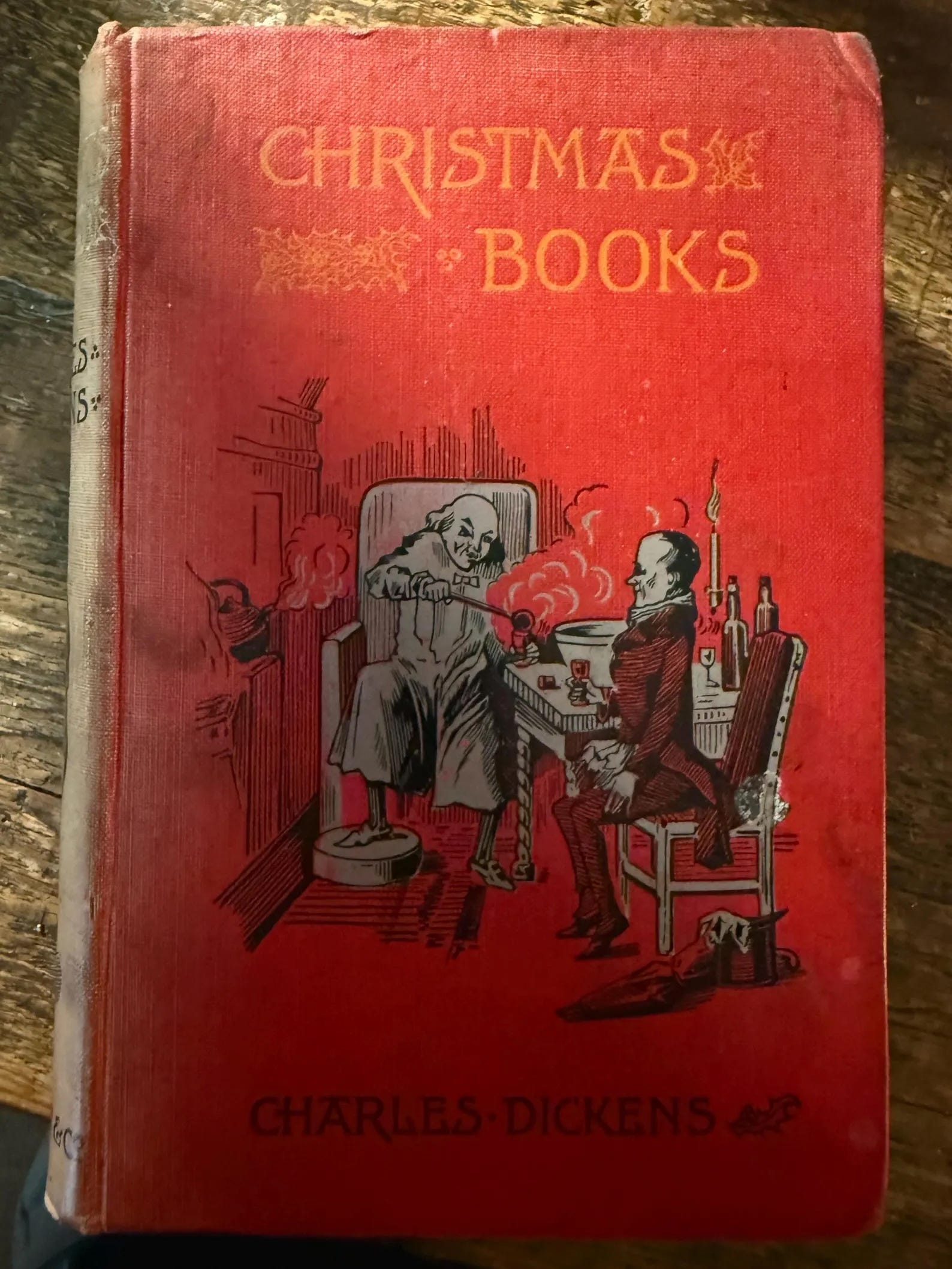
Though many self-proclaimed progressives have yet to notice, the movement against a Christian Christmas has succeeded. And though those who have fought for this cause continue to fight, the pendulum has begun to swing back in the opposite direction, as it does whenever any progressive movement wins. Thus, in our day, it is the people who celebrate Christmas as a Christian holiday who are the new rebels.
This means that the five Christmas stories written by Charles Dickens, A Christmas Carol (1843), The Chimes (1844), The Cricket on the Hearth (1845), The Battle of Life (1846), and The Haunted Man (1848), are once again the progressive tales they were when first written. In the “Christmas Books,” as they have been called, Dickens was fighting for something about the season that had been lost in his Christian England; something we can fight for in our world today. As a self-proclaimed Christian rebel, I will be reading and reviewing these progressive Christmas stories this Christmas season.
For this introduction, it is enough to share with you the first thing Dickens taught me about being a radical during the Christmas season: the culturally unifying theme of Christmas past has been misunderstood in Christmas present and thus threatens that unity in Christmas future. Those who have fought for a non-Christian Christmas have mistakenly believed that the wonder of Christmas was the result of socially enforced conformity to a particular theology. Dickens shows us that the magic of Christmas is less about correct religion and more about being better human beings. It is a time when we might let go of the more common and base human motivations that hold our attention for 11 months of the year and pursue something higher.
Dickens puts it this way in the introduction to his Christmas Books:
My purpose was, in a whimsical kind of mask which the good humor of the season justified, to awaken some loving and forbearing thoughts, never out of season in a Christian land.
Those “loving and forbearing thoughts” describe the way of being human that has become rare, almost to the point of extinction, in our own day. Reading and applying Dickens’ five stories this Christmas season could be the most radical and progressive actions we take. And if we are lucky, we might even “makegoodhappen.”
Go be that rebel and many of us are trying to join with you in this season