
Umami Bible
A New Commentary on Proverbs 30

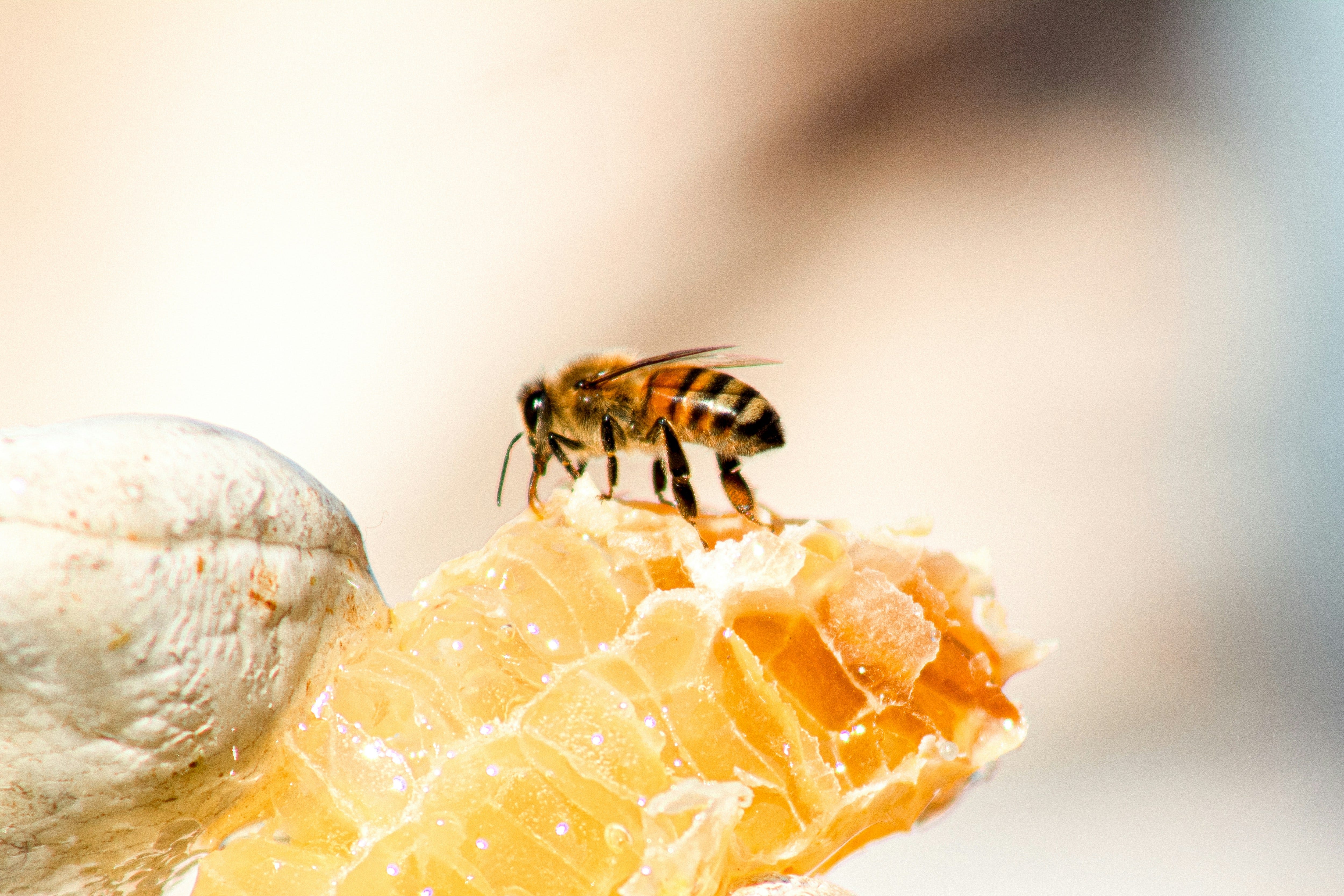
And he said to me, “Son of man, eat what is before you, eat this scroll; then go and speak to the people of Israel.” So I opened my mouth, and he gave me the scroll to eat. Then he said to me, “Son of man, eat this scroll I am giving you and fill your stomach with it.” So I ate it, and it tasted as sweet as honey in my mouth. Ezekiel 3:1-3
Savoring scrolls. Biting books. Gnawing on knowledge. We don’t typically think of these adjectives modifying these nouns. But eating and learning come together a surprising number of times. In the book of Proverbs, for example, we read:
Wisdom has built her house; she has set up its seven pillars. She has prepared her meat and mixed her wine; she has also set her table. She has sent out her servants, and she calls from the highest point of the city, ‘Let all who are simple come to my house!’To those who have no sense she says, ‘Come, eat my food and drink the wine I have mixed. Leave your simple ways and you will live; walk in the way of insight.’ -Proverbs 9:1-6
Taking our initiative from the biblical Solomon, let’s share a meal and see what we learn. Maybe it will taste like honey in our mouth.
It turns out that Solomon is not the only chef at wisdom’s banquet. Thirty sayings of the wise include dining wisdom like “Do not eat the food of a stingy host, do not crave his delicacies; for he is the kind of person who is always thinking about the cost.”1 King Lemuel (chapter 31) has advice about beverages when he says, “…it is not for kings to drink wine, not for rulers to crave beer, lest they drink and forget what has been decreed, and deprive all the oppressed of their rights.”2 Agur son of Jakeh’s addition to the smorgasbord of knowledge has a complex flavor profile for us to savor. You might call Proverbs 30 biblical umami.
This word “umami” originated in early 20th-century Japan. It is widely recognized as the fifth basic taste, alongside sweet, sour, salty, and bitter. It captures the deep savoriness of broths, mushrooms, and aged cheeses.
Agur’s umami captures a deep humility joined to a detestation of arrogance. The result is an artistry with dark overtones leading, unexpectedly, to wonder and awe. It enables us, beyond the sweet, sour, salty, and bitter, to experience a deep and new savoriness of life.
So let’s begin.
We take the first bite. Like umami, Agur’s wisdom isn’t a cloying confection. Instead it begins with notes of humility. But within that humble flavor is the beginning of a sapid salubriousness, leaving us wanting more.
I am weary, God, but I can prevail. Surely I am only a brute, not a man; I do not have human understanding. I have not learned wisdom, nor have I attained to the knowledge of the Holy One.
Who has gone up to heaven and come down? Whose hands have gathered up the wind? Who has wrapped up the waters in a cloak? Who has established all the ends of the earth? What is his name, and what is the name of his son? Surely you know!
With our second bite, we get the first taste of something which will dominate the flavor profile as his wisdom becomes a heartfelt prayer:
Every word of God is flawless; he is a shield to those who take refuge in him. Do not add to his words, or he will rebuke you and prove you a liar. Two things I ask of you, Lord; do not refuse me before I die: keep falsehood and lies far from me; give me neither poverty nor riches, but give me only my daily bread. Otherwise, I may have too much and disown you and say, “Who is the Lord?”Or I may become poor and steal, and so dishonour the name of my God.
Not only is there longing for faithfulness, but a desperate call for protection. For deep in his experience is the knowledge, not only that the world in which he lives constantly threatens destruction, but that it also tricks us into participating in its strife.
Our next bite is the bitter fruit of human temptation, deeply embedded human habits like slander, cursing, pride, and discontent, which erode the strong ties of human community.
Do not slander a servant to their master, or they will curse you, and you will pay for it.
There are
those who curse their fathers and do not bless their mothers;
those who are pure in their own eyes and yet are not cleansed of their filth;
those whose eyes are ever so haughty, whose glances are so disdainful;
those whose teeth are swords and whose jaws are set with knives to devour the poor from the earth and the needy from among the human race.
Then he moves into a numeric structure that will guide us through the rest of the meal:
‘The leech has two daughters.
“Give! Give!” they cry.
There are three things that are never satisfied, four that never say, “Enough!”:
the grave,
the barren womb,
land, which is never satisfied with water,
and fire, which never says, “Enough!”
He then concludes his grotesque portrayal of the world with the kind of extreme judgment desired by people who long for the horror to be neutralized by justice and replaced by beauty:
‘The eye that mocks a father, that scorns an aged mother, will be pecked out by the ravens of the valley, will be eaten by the vultures.
Now, as we near the end of his meal, we begin to experience his first expressions of wonder and beauty:
‘There are three things that are too amazing for me, four that I do not understand:
the way of an eagle in the sky,
the way of a snake on a rock,
the way of a ship on the high seas,
and the way of a man with a young woman.
This last, and beautiful description of human love is disturbed by another grotesque description of humans breaking the most beautiful bond of one human to another:
This is the way of an adulterous woman:
she eats and wipes her mouth and says, “I’ve done nothing wrong.”
This thought draws him still further away from natural beauty to ways in which, in his context, the structures that support and facilitate the good life are threatened and broken down in miscarriages of justice:
Under three things the earth trembles, under four it cannot bear up:
a servant who becomes king,
a godless fool who gets plenty to eat,
a contemptible woman who gets married,
and a servant who displaces her mistress.
But he does not give way to despair. He turns from temptation by searching for things that surprise, rather than threaten, that prove that hope is not lost:
Four things on earth are small, yet they are extremely wise:
ants are creatures of little strength, yet they store up their food in the summer;
hyraxes are creatures of little power, yet they make their home in the crags;
locusts have no king, yet they advance together in ranks;
a lizard can be caught with the hand, yet it is found in kings’ palaces.
Which leads his thoughts to more beauty, to behavior that encourages, strengthens and encourages hope:
There are three things that are stately in their stride, four that move with stately bearing:
a lion, mighty among beasts, who retreats before nothing;
a strutting cock, 3
a he-goat
and a king secure against revolt.
The meal concludes where it began. He frames his banquet of wisdom with a warning to be humble and avoid destructive behavior. Continuing to use picturesque words, he writes:
If you play the fool and exalt yourself, or if you plan evil, clap your hand over your mouth! For as churning cream produces butter, and as twisting the nose produces blood, so stirring up anger produces strife.
Do the ancient words of Agur taste like honey to you? Why or why not?

Proverbs 23:6-7
Proverbs 31:4b-5
“Cock” does not just imply a rooster, or male chicken, but is a generic term for a variety of male birds.